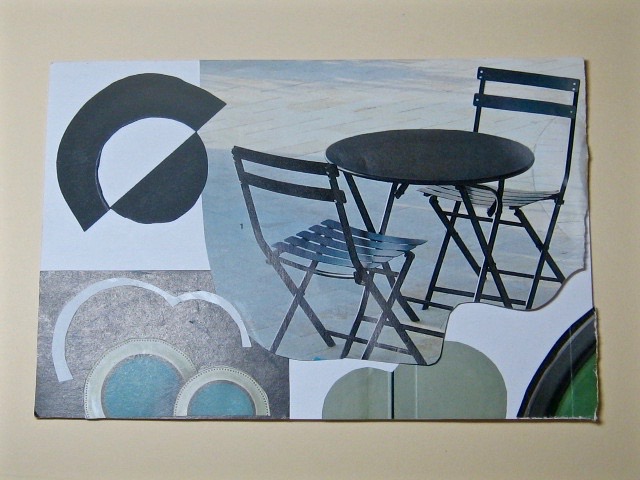
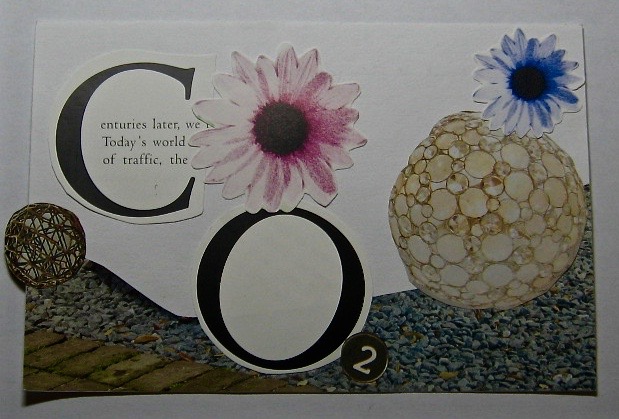
The Five Minute Friday prompt word just came through in my email this morning, and oh, what a doozy it is this time! Especially for me. Read on and you’ll see why in my free-write response:
Woman
woman
taken out of man
formed from his side (“rib” perhaps being much like a “side” of beef)
created relational, as a completion of the humanity already formed
built from the flesh of that humanity which had been molded from the clay of earth, the soil of the ground.
And the man was connected to the earth, to the ground, which he tilled,
and the woman was connected to the fleshly humanity to which she was counterpart.
And the Curse, when it came down, hard and heavy, walloped the man’s connection with the ground, the earth,
and walloped the woman’s connection with humanity, with her human counterpart, her husband, and with her children to come.
Decades ago I wrote a book, a book called God and Woman: the Issues, the Love,
a book that had resulted from many months of (thousands of) hours of Bible research,
a book that explored all the Bible had to say directly about and to women,
and also where it left women conspicuous by their absence.
And then, at the suggestion of a rough-draft critique,
I researched more, to gain some threads to weave into the picture,
threads from elsewhere than the Bible.
And I wove them together, and formed a tome.
And I saw that my creation “was good.”
But not “very good.”
And later, much later, I have come to see what was especially “not good.”
Just as it was “not good for the man to be alone,” it was also not good to consider woman alone: her creation, purpose, role, and essence… alone, without due consideration of all else the Bible (and life) had by then shown me.
Woman, in her very essence, her created nature, is so closely, maybe even intimately, connected to humanity as a whole, to the male side of it as counterpart, that to consider woman in isolation from all that—and from all that the Bible says about all that—is to get only half of the jigsaw put together.
I have been glad, actually, that I never did manage to get that book published,
having come to see the “not good” side of it.
And now I sit and seriously consider the rewrite that perhaps cries out to be done,
considering the whole picture that ought to be revealed and focused on, especially in our time, when issues like the abuse of women have become searingly hot.
An invitation to a reunion! Yes! I really welcomed this! But the date was initially foggy, so I had to wait and see…
When I did see, I first thought the timing was… untimely—but before long, changed my mind entirely…
A little background: Once upon a time Dawn Paoletta of Enthusiastically, Dawn initiated an RJD (Random Journal Day) link-up to offer journal-keepers a chance to get together and share “random” exerpts from personal journals—first weekly, later monthly. Unfortunately I came on board a bit late in the game, and was just getting fully immersed in participating when time constraints and circumstances pushed Dawn into dropping the link-up.
So now her emailed invitation to regathernaturally got me all excited!
Days later, however, she announced the reunion date as right at the start of Holy Week!
“How inconvenient!” I thought at first.
Then I surveyed my recent journals…
“How convenient!” I then decided.
Last year I began this pictured journal at the start of Lent. It’s a “different kind of” journal from any I’ve ever kept. You could almost call it a “creative workbook journal.” Since I’d bought the book, 40 Days of Decrease by Alicia Britt Chole, in Kindle form, I wanted some way to keep pertinent notes and quotes and thought-question answers in a handle-able, easily accessible form.
I’d also been reading about “altered books” at the time, and how to encase hand-bound books in old book covers. Out in the “storage shed” I found a book just the right size, a 1930’s (or 40’s?) how-to about… stage makeup!
Why did we ever buy such a book? Nevertheless it was just the right size and thickness. And in pretty good shape.
So, voila!
Keeping the book cover’s original blue color, I painted over the title box and spine in burnt sienna acrylic, and raided my scrapbooking paper stash for pages and trimmings, like the flower design and geometric band above.
…
Opening the journal again this week for RJD, how “coincidental” it felt to see two other “invitations” starting it! One contains copied excerpts from Alicia Chole’s introduction, inviting the reader not only to read and ponder, but to let God make soul changes through the process.
The second, pictured above and below, is from St. Clement’s letter to the Corinthians, inviting his readers to the peace of repentance.
What else would a true observance of Lent be?
After her introduction, Alicia Britt Chole launches into more invitations: one for each day of Lent, in fact—and every one of them an invitation to a different kind of fasting.
The first one: to fast “Lent as a project.”
Now, I know my whole altered-book “creative workbook journal” must seem to head exactly counter to this. But no. The journal is the project, not Lent. I made it to help me re-think Lent, to give me a place to record my answers and thoughts about her questions… like the one:
“In what ways have you thinned your life in order to thicken your communion with God in previous [Lenten] season?” A thought-provoking, and potentially Lent-changing query, isn’t it? (You can eaves-drop on my answer below by enlarging your screen view.)
And how would you answer, about this present year, or any Lenten observance you’ve been doing—or not-doing? Has it been “thinning your life” and “thickening your communion with God”?
This is the kind of thought-provoking questions that fill Chole’s book. I found it very worth the read, the ponder, the answer-writing, the related journal-making.
The selected scriptures provoke thoughts, too. And the journal gives adequate space to write them out thoroughly:
My journal “project” also gave me, on its unlined pages (my favorite for any kind of journaling), the opportunity to expand my reflections and express my reactions in other forms than writing. As, here below, with a word-and-phrase collage, mingled with pertinent verses from Day One’s suggested Scripture reading:
Here I was able to lay out graphically the vast difference between Judas and the Mary who broke the alabaster jar and wiped Christ’s spikenard-drenched feet with her hair.
It’s been a rich experience–to do all this last year, and to re-view it all now.
*****
To read about others’ journaling experiences, go here.
It’s been a bad year for maple syrup up in these parts.
And for my blogging. The flow just wouldn’t go.
“Nobody’s boiling,” is the maple word on the (frozen) grapevine. This winter’s begrudging conditions have been making it hard for me to get the creative juices flowing as well.
Who would expect a November “break” from blogging to turn into three more months of non-productivity? But, like maple sap, writing can freeze up and stay that way. Life in general around here this late winter seems to have hit a frustrating stall. People I meet, even strangers on the street or at the doctors’ office, strike up a complaining conversation about the weariness of a winter that just won’t quit, despite its tiny hints of false hope that it will.
The problem with the maples isn’t that thaws haven’t happened. The snow has melted off most of the lawn in repeated cycles, between the repeated icings and snowfalls. And it isn’t that the warmth hasn’t ever lasted for more than one day. The grass even started greening temporarily a couple of times. What’s wrong is these maples’ great hungering need… for sun.
The locally knowledgeable say that unless that sun pours down and bathes the maples’ upper branches in its light, the syrup below won’t be drawn up, up, out of its confines in their roots. And this has been a predominantly sunless pre-spring.
But look what I saw this morning!
I need sun, too. And Son. Without the former, vitamin D languishes, and human energy and health flags with it. Without the latter, spiritual life wilts and lies dormant.
So I think I’ll take a walk today, out on the rises, and lift up my crown and my upper limbs to both sun and Son and invite a soaking. Then I’ll come in and review the trickles of creativity that did happen in the temporary thaws and occasional sun blooms of this long winter, like the following droplet of a collage…
“If a little dreaming is dangerous, the cure for it is not to dream less, but to dream more, to dream all the time.” -Marcel Proust
Foreword note: Before I share the following, let me make it clear: I love trees, and woods, and the shady, wind-shielding privacy they offer—up to a point! I hadn’t realized how far beyond that point we’d gotten…
Above photos taken four years ago. I evidently took no pictures of these trees since then, since they became just a wall of green.
From my journal, November 30, 2017:
Startled by the date, suddenly surprised that it’s the last day of November! [This is especially odd, considering how often I’ve been peering at the calendar!]
It’s been an interesting month…
Yesterday was an interesting day…
I’d planned to run errands early, and avoid the chain saw noise that would accompany tree removal by the driveway. But my head still ached, my sinuses were still so stuffed I felt oxygen deprived, and my throat kept stinging all the way up through my right ear. So I decided to stay home and rest.
As it turned out, the preliminary sawing wasn’t very loud (smaller chain saw), and even the big stuff later I was able to muffle and distract my mind from, with ear buds plugged into computer.
And what a blessed difference once that middle tree fell!
When I peeked out the bedroom window to observe the progress, the opened view hit me like a refreshing breeze or cool drink on a hot, thirsty day [though this day was neither]—or [more appropriately], a flung-open prison door!
That wall of evergreen had grown so big and tall and solid and dark, it had been making me feel closed in, limited, confined. Now, as in the past, I go to that window happily, able to gaze out over meadow and sky, to see the clouds in pale shades of color stretched across the horizon. [We can now also see the animals that run up and down the slope beyond the line of evergreens or sneak into hiding places to eat things we don’t want them to.] Now, with all the wood cut into logs and all the debris hauled away, it’s a very happy thing.
When I went outside later, for a sudden errand after all (that I’ll tell about later), I saw that we even got a Charlie Brown Christmas tree out of the timbering operation—with lots of cute little pine cones festooning it already!
It’s so quirky and scraggly, but fresh and piney-smelling, I’ve actually been thinking of hauling it into the house and setting it up, at some point during December, at least. But I’m not sure. I haven’t had a Christmas tree up inside for several years now, and that little treetop, scrawny as it is, just might do what the whole tree it came from was doing before it came down: crowding life and obscuring the fuller, better view.
Though Advent has sneaked up on me again, I’ve been pondering it, lots. What a great focus its forward look might be for this December! Could it help prevent the month’s becoming just a haphazard pile of busy distraction that obscures Christ more than reveals Him? Its expectant seeking might open up the view to a far more meaningful Christmas than the more familiar traditional preparations (trees and bells and jelly-belly elves)—if we keep our beloved December doings trimmed to appropriate size…
Well, God, with his remarkable sense of humor, evidently has been helping with this:
Just a few days before Thanksgiving, our double wall oven died! (And yes, we were hosting the Dinner.) Finding new ovens to fit our available space proved difficult. When, this week, we finally found the brand and model we thought would work best, another surprise: Online searching revealed that this day, November 30th, was the final 39%-off sale day for this exact model!
We scooted right out and ordered the set, but the earliest delivery date offered was December 19th! This is long past my usual cookie baking time, people!
But maybe that’s the point, hmm?
***
Questions to ask myself (and you may ask yourself, if you like):
-What typically grows so big in my life at this time of year, that it crowds and blocks out Christ?
-Can I trim these things to reasonable size, or would they be better cut out and hauled away?
-Regarding each family tradition or ritual, which of them don’t really have much to do with Christ’s first or second advent?
A post I hope to publish soon (called “Gotham’s Dirty Little Christmas Secret”) might help sort these things out (if I can just alleviate this pesty cold enough to think straight…)
Young daughter to father, while pushing her small hand against his belly: “You need to get some exercise. You’re out of shape!”
Mini Collage #31, “Round Up” cSylvia Robertson, 2017
Father to daughter: “I’m not out of shape. Round is a shape!”
What kind of shape are you “in”— or “into” right now?
Round seems to be the shape I often fixated on during my “31 Days”—er, I mean 29.
(Admittedly, I have no Day #29 or 30. But I excuse myself—like the above dad—by pleading a late start. As for the 31 collages promised: Delivered, as pre-announced! You can go back and count…)
Anyhow, I realize in retrospect that rounded forms caught my attention and dominated the design in six more of those 31 collages. These:
Mini Collage # “Cut and Flip, Round” cSylvia Robertson, 2017Mini Collage #15, “A Beautiful Ride” cSylvia Robertson, 2017Mini Collage #11, “Round on the Ground” cSylvia Robertson, 2017Mini Collage #5, “Be Like the Bird…” cSylvia Robertson, 2017Mini Collage #9, “Fleur de Free” cSylvia Robertson, 2017Mini Collage #4, “We Sail Through Time” cSylvia Robertson, 2017
In addition, circles or rounded forms play an important part in all of these (ten more):
Mini Collage #23, “Only Words” cSylvia Robertson, 2017Mini Collage #7, “Rocking Chair Care” cSylvia Robertson, 2017Mini Collage #14, “Inward Exploration” cSylvia Robertson, 2017Mini Collage #2, “On Being Transparent” cSylvia Robertson, 2017Mini Collage #19, “On Being Transparent, 2 cSylvia Robertson, 2017Mini Collage #3, “Birds and Dragon Flies” cSylvia Robertson, 2017Mini Collage #8 “Which Way is Out?” cSylvia Robertson, 2017Mini Collage # 12, “Books and Bottles” cSylvia Robertson, 2017Mini Collage #1 “Swishy Skirt Fishies” cSylvia Robertson, 2017Mini Collage #1o, “Let’s Not Play Crazy Games” cSylvia Robertson, 2017
We could even stretch it and say the hearts are very rounded in this one…
Mini Collage #25, “Lovelights and Blues” cSylvia Robertson, 2017
and the distant umbrellas in this one, though technically octagons, look very like circles…
Mini Collage #16, “Got it Made in the Shade” cSylvia Robertson, 2017
And oh, yes, the flowers dominating this foreground are round, aren’t they?
Mini Collage #22, “Birds in Lush Growth” cSylvia Robertson, 2017
That would make 20 out of 31. Almost 2/3! No other particular shape predominates so much.
Is this important? Maybe. I need to ponder it more myself as I review all of these.
The thing is, collage—like any expressive art form—can show us things about our inner thoughts, feelings, and desires that we might not have noticed. Sometimes contemplating it helps uncover obscured issues we need to work with—therapeutically, or as a means of setting and assessing goals that match our inner climate.
At the silent retreat I attended last January, in an optional “creative journaling” session, we attendees were asked to draw a shape: without overthinking, just draw whatever our hand happened to put down on the page before us.
We were then invited to consider why we chose it, and what thoughts and feelings it seemed to conjure as we gazed at it. Then anyone who wanted to share their reflections could do so.
Someone displayed a triangle, sharing thoughts it brought to her mind, someone else an elongated rectangle. Me? I felt like the odd man out. It seemed all the others had chosen a simple geometrical form. I had drawn, and kept retracing, a free-form label-less rounded shape. I felt somehow embarrassed, like the kid who thinks she “didn’t do it right” because her product seems so different.
When considering what might have prompted me to choose it, I felt reticent, shy, embarrassed. After returning to my room, I thought, oh, this is silly, rumpled the paper and tossed it into the wastebasket. But after thinking about it more later, I ended up retrieving it and flattening it out on the tabletop, smoothing with my hands. Emerging from my mind were reminders of a deep disappointment in my life. Soon I was realizing here was something well worth bringing before God during my retreat.
I know I’m not revealing my innermost thoughts here, but that would take some time, be deeply personal, and involve other people who wouldn’t appreciate being the subject of a public forum blog post. Also, as they say, “it’s complicated,” and I still need to give it, and all these rounded patterns, some further pondering.
So, this 31st mini collage rounds up this series. I not only “feel” finished, but I’ve already started working on a new challenge for November: to write a 50,000 word “novel” before December.
I may even illustrate it with collage—or with that shape from January’s retreat—because what I’ve begun writing is bound to touch on the subject revealed in my heart.
***
What about you? Want to try it? Just take any old piece of paper, and any old drawing implement, and draw the first shape your hand finds itself making. And ponder: Why did I do that? What was I thinking, and feeling, down deep inside? Should I take this before God? Better yet, start by asking God to reveal anything important before you draw.