I had read about art endeavors turning into worship–even being that from the start. And sometimes I’d sat developing collages whose construction surprised me with its therapeutic nature and peaceful—or exuberant—enjoyment. But that’s not worship of the quality or focus I’m thinking of: I mean a deep appreciation and exultation of God Himself arising from the heart and filling the eyes with tears, the throat with a lump, and the soul with humble gratitude that won’t quit.
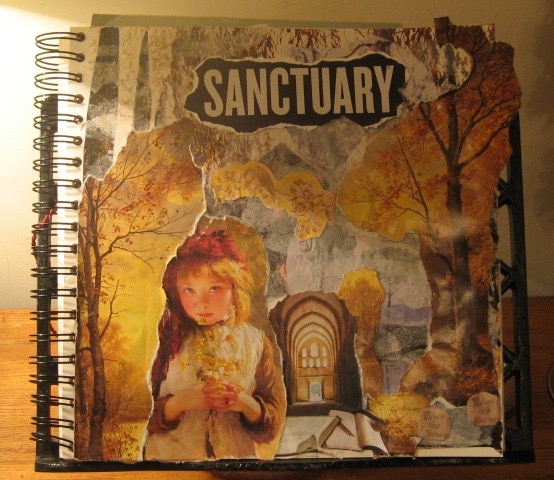
The prompt for the project was…
How do you maintain a continual conversation with God? How can you incorporate more color into your relationship with God? Have you ever wanted to be a monk?
The quote from Brother Lawrence was…
…we should establish ourselves in a sense of GOD’s Presence, by continually conversing with Him. . . we should feed and nourish our souls with high notions of GOD; which would yield us great joy in being devoted to Him.
…The scripture that introduced the post was Psalm 63:1, NLT.
…And a new technique (at least to me) for doing collage by building up layers was included, via a link.
All this came came from a Journaling series Kel Rohlf published two years ago on “God + Art,” in which she incorporated quotes from and thoughts about Brother Lawrence throughout. Happily discovering it via a comment left on my blog last week, I could hardly wait till today to get going on it.
So I did as Kel modeled for me in her account of her collaging process. I gathered up images suggesting something related to how I’ve learned through the years to “converse with God” more continually.
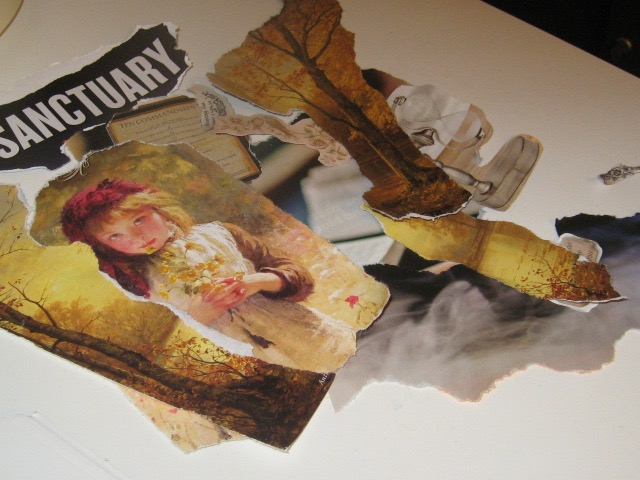
Actually, first I sat. I sat by my window where all those potted-up plants from the flower and herb beds are now cheering the “creativity room.” I sat and just gazed out on the new autumn slowly morphing gold and bronze into the landscape. Strangely, what caught my eye, though—and held it—wasn’t vibrant color in tall treetops, but three small fruit trees standing each alone in Husband’s upper garden.
I wondered why my eyes kept turning back to them every time I started glancing away. I supposed it was partly because they’ve come into clear view just this week from beyond all those tall cornstalks now cut down, ground up, and gone. But I suspected there was more to it than that. Kel’s post spoke about how pondering just one winter-bare tree branch suddenly changed Brother Lawrence’s life.
Anyway, you can see the tree imagery stayed stuck. Look how many trees (often in threes) I pasted down in my collage’s first layer, totally without having planned or looked for them!
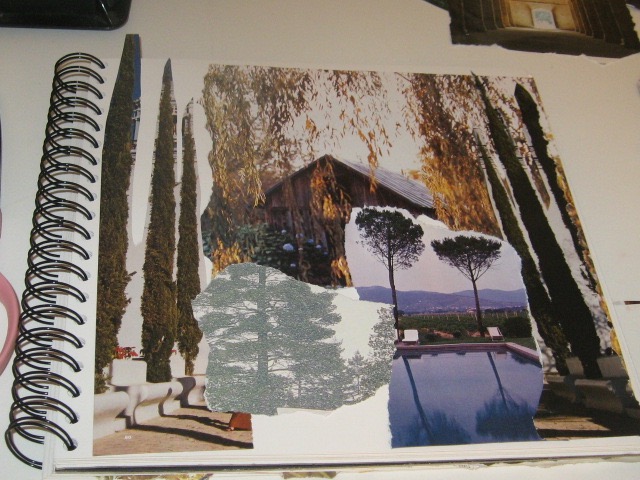
Here’s the second layer.
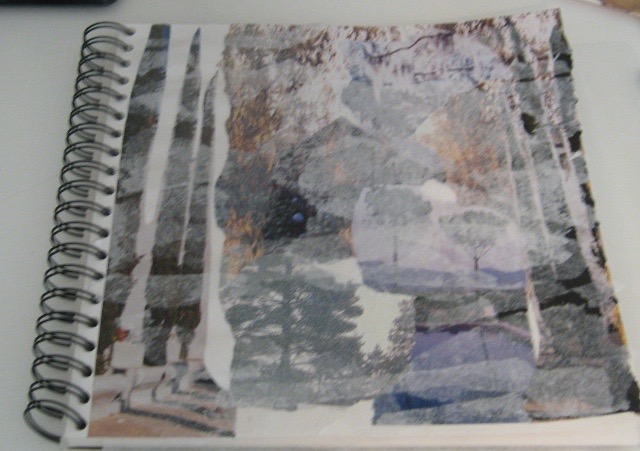
I used white gift tissue paper to subdue and quiet the first layer which would become a background I wanted to recede and not compete with what was to come. I was impressed with how much this technique I’d come up with seemed to turn the sharp, hard photos into water colors.
Then I pasted down the final layer.
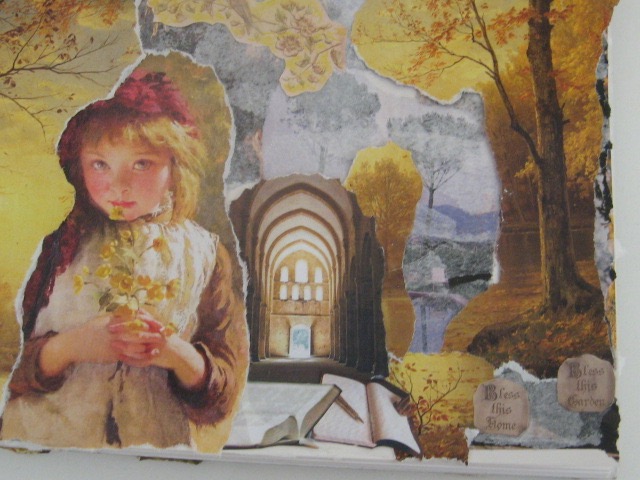
There’s a lot of imagery there that I will need to talk about in a future post, but for now let me just say it was that little girl with her handful of wild posies shyly, tentatively offering them to someone special that stirred my emotions as I thought “How like me with God!”
What do I have to offer Him but what He has already given in His vast abundance of created wonders? All I can do is pick from that abundance like a little girl in a wild and wonderful meadow and offer that back to Him.
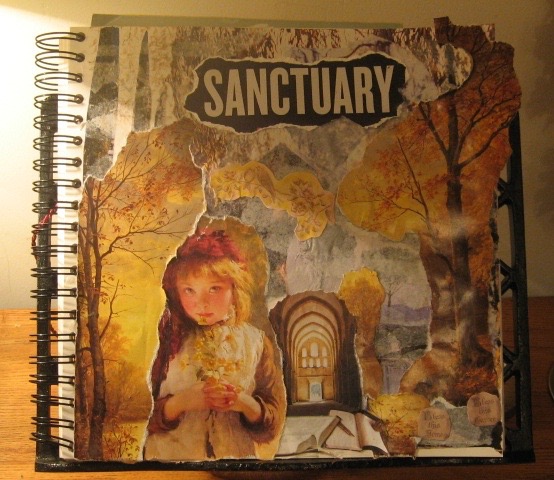
What would you like to offer back to God? In what form? Does His already having provided it to you make you feel small and childlike and humble?
*****