Blogging, the Christ-Life, and Christ’s Life (Reflections on Matthew’s Gospel)

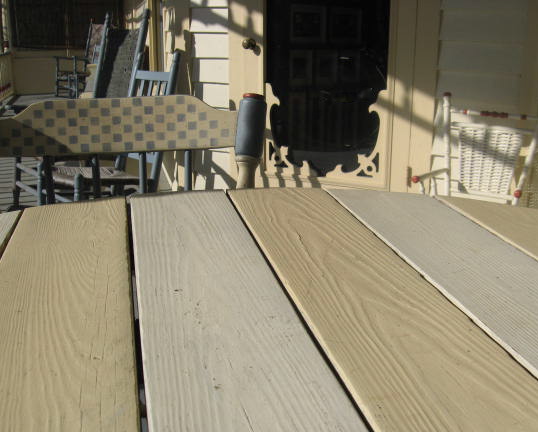
So I sat on the porch that day, and read from Matthew’s Gospel, sifting through it my questions and thoughts about blogging. I read more as the week went on, read it all, then reread parts, all through September.

What it gave me wasn’t a definitive answer whether to keep blogging or not, but relevant insights and a general spirit of the whole book, probably more important than any nit-picky details or yes-no answer.

My first read-through reminded me how “upside down” its spirit compares to our present world’s mindset in general and most writing and publishing today in particular. The Gospel’s spirit is humility, so opposite the social media methods to “promote your blog” and present-day publishers’ demands to “promote yourself.”

Matthew begins with the obscurity and lowliness characterizing the start of Christ’s earthly life (and most of the rest of it)…

God visits Earth in the form of a mere infant, born to an insignificant young woman, in a smallish town of little note in its day. He gets a feeding trough for a bed, and the only attendants other than His earth-parents are a bunch of sheep-smelly herdsmen from out in the fields—the only ones who get the angelic announcement.

There’s a king and a palace in Jerusalem, and important religious leaders in the temple built for God. Yet He visits and works through the humblest, least noted things and places and people.

Those people are often oppressed—and hidden. Mary and Joseph must take the Christ child Himself and flee to hide in Egypt, and on their return they go reside in a place about which Nathanael would later quip, “Can any good thing come out of Nazareth?”

After that we read nothing about the first thirty years of Christ’s life, except Luke’s account of His one-time exchange with the learned in the temple at age twelve. His earthly parents, much distressed over discovering his absence on their return home, frantically backtrack, and finding Him there, rebuke Him in their ignorance and hurry Him back to Nazareth Nowhere. They don’t “get it,” and yet He, the mighty God of All wearing earthly flesh, submits to them and their sequestering!

Finally resurfacing decades later at the Jordan River (Mt 3), He arrives to have someone else baptize Him! Then the Spirit descends and leads Him forth… into the howling, lonely wilderness, away from everyone else!

What about that man John, of whom He asks baptism? To what great place did God call him to minister? The desert of Judea, where he lived in destitution, wearing the equivalent of a burlap sack, subsisting on forage, such as locusts!

John doesn’t go unnoticed, but we read nothing about his going after a following. He cries Truth in the wilderness, and people come out to him. (Just why the text doesn’t say.) His words don’t sweet-talk with the wild honey that audience-seekers might use, either, but often bite bitter and hard and sharp.

Instead of seeking growing numbers for himself, he points his followers to Jesus (John 1:35-38), and when they leave to follow Christ and others get upset about the competition stealing his numbers, John rightly answers, “He must increase, I must decrease” (John 3:26-30).

Later on, Jesus repeatedly slips away from the crowds to hide in holy solitude with the Father alone, and even instructs people to keep secret who He is and how He miraculously healed them…

But isn’t that just how He told others to do in the Sermon on the Mount?

(Coming soon: Blogging and the Sermon on the Mount.)

[No major conclusions here yet, for wisdom’s process requires adequate collecting of insights first. These were just the beginning.]


Quietly

“‘Take heed, and be quiet; fear not, neither be faint-hearted.’

“‘In quietness and in confidence shall be your strength.’

“Such words reveal to us the close connection between quietness and faith, and show us what a deep need there is of quietness, as an element of true waiting upon God…

“‘It is good that one should quietly wait.’

“How the very thought of God in His majesty and holiness should silence us…

“‘The LORD is in His holy temple; let all the earth keep silence before Him’ (Hab 2:20).'”

-Andrew Murray, Waiting on God

*****

Linked to


Found: 10,000 Reasons!


It happened! In that blog break! I found the solid evidence of way over ten thousand biblical reasons to praise the God of the Universe!

I didn’t list and count them, individually (and you’d be bored silly reading such a long list if I put it on here in this post). But they exist. Here’s the proof, so simple, and how I stumbled on it…

It was right in front of me!

September 2, the Lord’s Day.

With some lovely extra time, I sit at the picnic table under the big black maple, shielded from the road by high hedge of green, companionable dog “visitor” serenely lounging in my company (that’s another story for some time later). Sunlight glowing, breeze whispering around me, Bible, journal, and smooth-gliding gel pen waiting on the table before me, my thoughts drifting here and there.

All my green surroundings, that wonder and delight of a black Lab, the beauty of the blue-sky day, all stir thoughts of God as Creator, and I open the Bible to its first pages…

“In the beginning, God created…”

I smile, and turn my journal to its next blank page, begin to write:

Reasons to Praise God

  • Because He created all the green and living things I see around me. (Gen 1)
    • the pines, arborvitae, all the other evergreens,
    • the shade trees: oaks and maples, poplars and sycamores, willows and birches…
    • the fruit trees bearing fruit containing seed after their kinds: apples, pears, peaches, plums, apricots, quinces, cherries (etc.)
    • the fruit bushes and vines: grapes and currants, raspberries, blueberries, blackberries, and more
    • all the nut trees: hickory, walnut, almond, pecan…
    • all the “woodworking,” trees: those named above plus cedar, acacia, chestnut…
    • every seed-bearing vegetable plant: peas and beans and peppers and tomatoes, onions and garlics and pumpkins and cabbages and broccoli and spinach and squash and on and on…
    • all those things we call weeds that are highly nutritious, like dandelions and lamb’s quarters and purslane and nettle…
    • dye plants like madder and indigo and marigold …
    • landscape plants: vines and grasses and bushes and decorative trees planted just to make lovely surroundings…
  • Because He made all the animals in their manifold varieties, each with its special feature and gifts, like…
    • this dog that “buries” his rawhide bone “for later,” like other dog types, herder and guard and “Seeing-eye”—and so on…
    • domestic farm animals in all their usefulness to man: sheep and goats and cows and pigs
    • birds that sing and spread the seeds and distribute the pollen
  • Because He put wondrous instincts into even insects and worms: like butterflies whose third generation returns to its forebears’ home, though no one showed them the way!

This list of living things could expand and expand, accordion style. I didn’t even mention reptiles or amphibians or fish and other water-critters. How many species are there? Or even genera, or “families”?

A second list could begin and grow, of non-living wonders of creation. Stones and gems and sand and soils, minerals and naturally-occurring chemicals and building materials…

Add in these Genesis 1-3 facts about our own creation:

  • That God placed in mankind…
    • ability to order, to describe and name, to sort and categorize
    • His spirit of creativity and aesthetics
    • everything needed “to tend and dress” a garden
    • the wonder of physical life itself!
  • That He gave us stewardship/dominion over all these works of earth
  • That He provided in creation all our physical lives need
  • That beyond this, He gave us all kinds of beauties that delight our senses, and those senses themselves to experience that delight
So, every flower, every gemstone, every star and planet in the heavens is a reason to praise Him, every experience of our God-given senses a reason to exalt His name.
This could conclude my search for Ten Thousand Reasons in the Bible. But pinpointing and pondering new-found reasons produces joy. So I’ll continue counting reasons in coming posts.
And may we all find daily new praises for Him, in our Bibles and our lives.
*****
Linked to


How Crazy Gratitude Empowers

She was a master of “hard eucharisteo,” thanking God for hard, hard things, not just with murmuring mouth, but with head and heart and life.

Shoved with all the mob of ragged women, through the gaping black hole of boxcar door, jammed so tight breath barely came, she’d said to sister Corrie, “Do you know what I am thankful for?…That Father is in heaven today.”

After standing, stripped naked, pained with humiliation under leering, sneering Nazi eyes, after Corrie’s sudden realization (“Betsie, they took His clothes, too!”), she gasped, “Oh Corrie, and I never thanked Him.”

And in the flea-infested squalor of the Ravensbruck barracks, where bad had become the worst of the worst, she turned 1 Thessalonians 5:18 almost into a game, a take-turns-giving-thanks.

“That’s it, Corrie! That’s His answer!. ‘Give thanks in all circumstances’! That’s what we can do. We can start right now to thank God for every single thing about this new barracks!”

Corrie stared at her… “Such as?”

“Such as being assigned here together…”

Corrie had to agree about that!

“Such as what you’re holding in your hand” (a Bible miraculously smuggled in).

About that, too.

“For the crowding. Since we’re packed so close, that many more will hear!”  She looked expectantly at Corrie, waited, prodded.

“Oh, all right. Thank You for the jammed, stuffed, packed, suffocating crowds.”

“Thank You,” Betsie went on serenely, “for the fleas and…”

That was enough for Corrie! The torment of multiplying bites from rotten, infested  “bedding,” drove her to declare she wouldn’t, couldn’t, thank God for the fleas

“’Give thanks in all circumstances,’” Betsie quoted. “It doesn’t say ‘in pleasant circumstances. Fleas are part of this place where God has put us.”

“And so,” wrote Corrie later, “ we stood between piers of bunks and gave             thanks for fleas.” (In fact for what were, much worse, black lice!)

Later they discovered good reason to do so, to make it make sense. They learned why their barracks was left unentered, why they were left unmolested, unhindered in their spiritual pursuits.

No guard or supervisor would venture one footstep into their plague of vermin. They could freely read their Bible to whomever would hear, could sing and worship in growing numbers in that dimness where lost souls became acquainted with the God of grace-in-even-the-bad-places.

Betsie ten Boom taught gratitude and grace by quietly living her faith-life amid the worst of worsts.  She understood and rejoiced in “the fellowship of His sufferings” (Ph 3:10), and trusted Him to be working all things for the good of His called (Rom 8:28), and those He would yet call in that dark place.

Thus the door opened to transformation: from a mob of grasping, clawing, fighting women-turned-animals in a hellhole—into a beautiful church of sorts, where worship rose like sweet incense from amid the stink, and kind friends began looking out for one another’s well-being, even above their own.

And from all of this arose Corrie’s certain knowledge of God’s clear purpose for the rest of her life:

“We must tell people what we have learned here… that there is no pit so deep that He is not deeper still. They will listen.. because we have been here.”

.

How often I complain of things so small, so insignificant, compared to such as Betsie and Corrie endured! May the Lord forgive my foolish sense of entitlement, and grant me grace to trust and thank as Betsie did, and live a life that teaches little lessons like those her life taught big.


How Hard Thanks Helps Determine God’s Direction

What does giving thanks for things I don’t like have to do with determining God’s specific direction for me?

A verse from Psalm 95 has been resounding lately in my soul…

“Today, if you will hear His voice, do not harden your heart” (Ps 95:7-8).

A few weeks ago I wrote these guidelines to myself:

To Hear from God…

#1 – I need to be still and know that He is God (Ps 46:10), to be “silent before Him,” (Hab 2:20) and “slow to speak”(Jas 1:19).

#2- I need to ask Him for His word, His wisdom (Jas 1:5; 1 Sa 3:9-10).

#3 – I need to turn to where His sure and settled word can be found: in the scriptures (Ps 119:89; 2 Pet 1:19; Pro 30:5; Ps 19:7-11).

#4 – (And here’s the relevant point…) From get-go to end, I have to be ready and willing to obey what He says (Jas 1:22). If not, I’m likely not to “hear” anything that doesn’t appeal to my foolish flesh and wandering, hardened, or hardening heart (Ps 95:7-8), two things opposed by nature to the Spirit (Gal 5:16-17). 

The state of the heart, an important part of God being heard!

A hardening heart makes us hard of hearing! 

What hardens a heart? Self-will and self-desires digging in their heels against God’s words of truth and instruction, maybe angry cynicism creeping in because we aren’t getting our own way.

What softens a hardening heart? A change in attitude!

And what best changes attitude?

“If you want to change your attitude, start with gratitude.”

I learned that little saying decades ago, from women living “hard eucharisteo” with amazing grace and strength. Little by little I tested their waters, followed their examples, learned to live it out in my own life, that thanksgiving in hard places, and saw for myself its glowing effectiveness.

To keep the heart from hardening with resentment or fear or buried anger or just stubborn self-will, our thanks must extend beyond what stirs up spontaneous smiles to the things we do not even like. Such difficult giving of thanks expresses trust in God better than mountains of offerings or achievements, and the heart that trusts Him holds no barriers between His words and its receiving of them.

This thanks in and even for difficulty can also empower us to spread the flame of love for Him like nothing else!

The next post gives a powerful example of how… 

*****

Linked to

WIPWednesday

Thought-Provoking Thursday