Pre-Resurrection Resurrection, and other Signs of Hope

Even in the dark days following Christ’s death, some strange and hopeful things occurred that must have given His daunted disciples some pause to think.

IMG_1182_2

For one thing, they must have heard how the heavy veil in the temple had torn down the middle at the moment He gave up His Spirit. That had to mean something.

For another, there had been strange sightings since then of people long dead and buried in the tombs, now walking around in the city (Matt. 27:50-53). Maybe they even saw some of these people themselves. This was like what they had witnessed at Lazarus’ burial cave. The chief priests and elders had wanted to kill Lazarus again, but instead other people had risen from death as he had.

What could all this mean? Even in their dazed state might Christ’s disciples not have felt some vague unvoiced anticipation?

IMG_1486_2

He had said, “Destroy this temple, and I will raise it again in three days.” Everyone seemed to have taken this to mean the stone temple in Jerusalem. But what if He had meant something else? And what about His answer to his opponents’ demand for a sign? He had replied that no sign would be given but that of Jonah the prophet (Matt. 12:39). What sign had accompanied Jonah but three days in the depth of darkness, followed by his catapulting back out into the light?IMG_1485

Yet any hopes like that must have merely flickered. For when Mary Magdalene went to the tomb the first morning of the next week to find it empty, she ran to the disciples crying in angst that someone must have taken His body and  she didn’t know where (John 20:1-2).

Even when she saw the Master herself, she was slow to believe it was really Him (John 20:14-16). And once she and the other women did, and ran to tell the others, these couldn’t believe till their own eyes beheld Him (Luke 24:9-11), or their own hands felt His wounds (John 20:25-28).

IMG_1484_2

How like that we can be when times grow black! How easy it is to allow the darkness to extinguish even reasonable hopes!

In the deepest darkness, let’s still look for the glimmers of light. Let’s remember the amazing things God has done in the past. Let’s search the word for promises, even the promises we don’t understand. Let’s wait, if we must, in darkness. But let’s wait in anticipation of eventual better things from God. Let’s wait in hope.

IMG_0676

 *****
[Yet another repost.]
.

In the Dark Gap

In the dark gap the silence howls.

IMG_7457

One day at the chasm’s brink gets chapters. Two days plummeted into its blackness get no words but brief enemy plot. Otherwise silence. Silence of the scattered lambs, too frightened even to bleat.

They draw together again in the darkness. But what do they say? What are their words? We find none.

Can there be words for this horror of despair? Nothing.

Between the lines, a great, black gap. Abyss of darkness too deep for eyes or mind to sound full down—

            between the verses…

                        Matthew 27:66 and 28:1,

                        Mark 15:47 and 16:1,

                        Luke  23:56 and 24:1,

                        John 19:42 and 20:1.

Millimeter nothingness on a page, but to hearts beaten dull, minds maimed numb, an infinity of soundless, boundless grief.

It’s in the gap you don’t know what you know you ought to know.

“I don’t even know if there is a God!” she moaned, who came to me when her world fell shattered.

“Tell me what you know,” he probed when I flailed around in confusion.

“I don’t know what I know,” I answered. “I don’t know if I know anything!”

I meant about God.

Sometimes we don’t.

The darkness rules, giant oppressor, signing out taunts.

Clues to light’s reality lie all around, but we’re in darkness, and our souls are blurred so how can we see?

Sit listening in the darkness. For the still small voice of Light. Call out in silent cry for it (for Him) to tell you what you know you ought to know, and then wait soundless and it will dawn. Look on the page, just after the gap. There’s where the glory shines. And there is a Lifeline to the other side.

“Now on the first of the week Mary Magdalene went to the tomb early, while it was still dark, and saw that the stone had been rolled away…”

*****

Linked to

The Lamb Among Lambs

IMG_1585_2_2

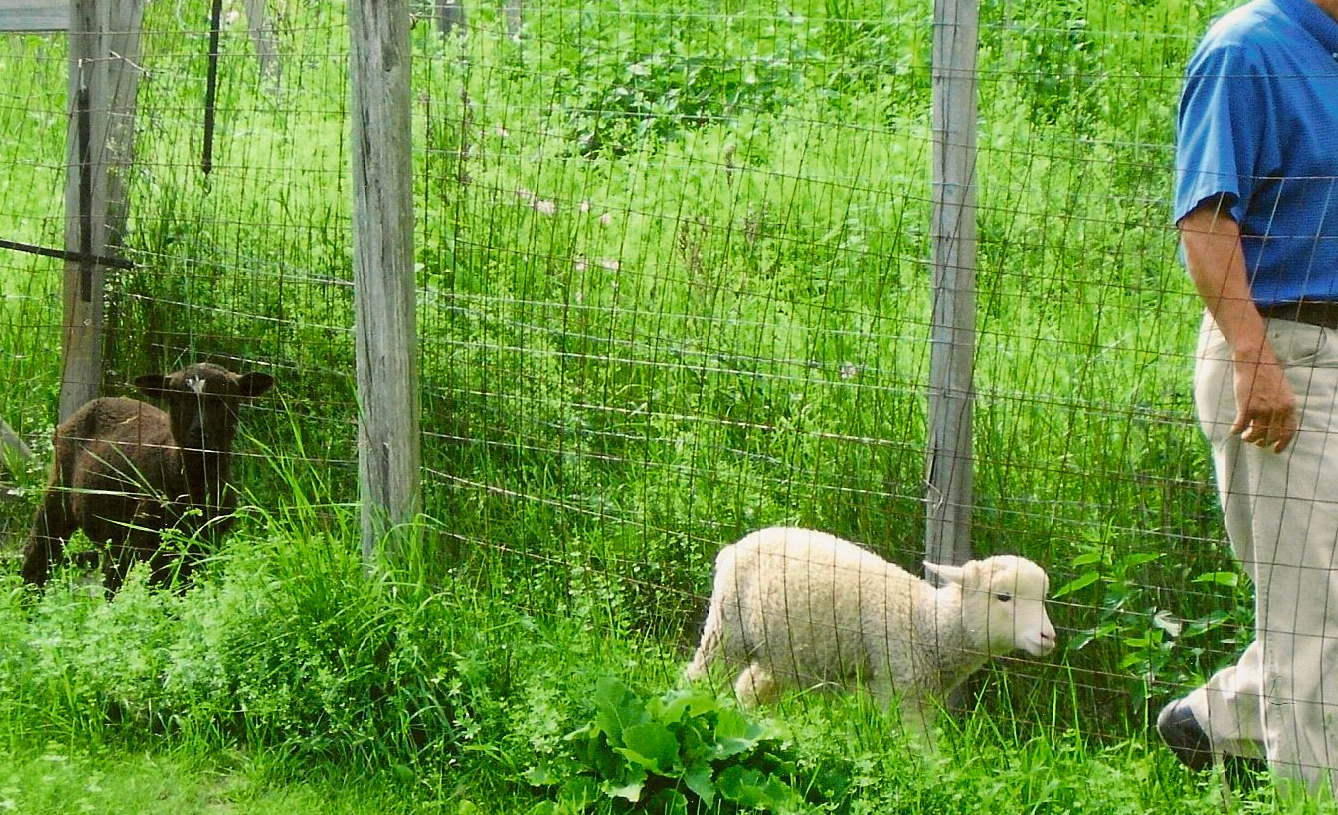
Entering Jerusalem that fateful pre-Passover day (so I’ve been taught), He approached amid a great bleating multitude of sacrificial lambs, coming to be slaughtered. 

They didn’t know. He did. Did each pace forward throb with the foreknowledge?

And what about His Father?

If you’ve ever raised a handful of beloved sheep (as Husband and I have), the thought of killing one for sacrifice tears at your heart. If the lamb in question is the best of the flock, flawless, one who runs to you when you enter the pasture and follows at your knee with devotion, so much the harder. 

It seems such waste, such loss, so unjust, and so personally painful.

What if it were your own little lamb in greater ways: what if it were your child? Your only child?

SCAN0010_2_8

Yet God is the One Who prescribed this lamb sacrifice, knowing that’s what it would lead to…

Leviticus says that not just at Passover but various times through each year, multitudes of such sheep—and bulls, and goats—had to face slaughter as sacrifices for the people. At Passover their blood sprinkled doorposts to mark death’s passing over those who had put their trust in God via that blood (Ex 12:22-23). Other times it sprinkled the altar, and the animal’s head and limbs were laid “in order on the wood,” offered as a “sweet aroma to the LORD,” in atonement for those who had laid their hands on the animal’s head (Lev 1:2-9).

However, the Bible also says, the blood of any animals (no matter how innocent) cannot take away sin, and so the process had to repeat every year (Heb 10:4).

Then came that man, that mysterious man, whom John called both “Logos” (meaning “Word”—John 1:1-2,14), and “Lamb” (John 1:29). Born in flesh like any little lamb, He grew to perfect maturity, and emerged from Nazarene obscurity with John’s announcement, “Behold the Lamb of God that takes away the sin of the world.” Now, at this landmark Passover, the priests, searching Him diligently for flaw or evil defect, could find none—none at all (Mt 26:59-61). Nor could Pilate (John 18:38).

Then (how bitterly ironic!) the temple officials laid their hands on His head in the form of slaps and blows (Mt 26:67). They approved His horrible slaughterHis head and limbs were “laid in order on the wood.”

They had to be men of their priestly station. It had to be a flawless “lamb” they offered—and more than that. It had to be God Himself in bodily form, offering Himself for humanity. For no mere human since Eden’s Fall has lived without the taint of sin (Rom 3:23).

Yet the priests who offered that Perfect Sacrifice didn’t realize that’s what they were doing. (Or did one? What did Caiaphas, the high priest, mean about one man should die for the people (John 11:50)? Strange statement, that!)

And so, as Isaiah had prophesied, “He was led as a lamb to the slaughter, and as a sheep before its shearers” (sheared of his clothes, Mt 27:28) “is silent, He opened not his mouth. He was taken… from judgment… cut off from the land of the living. For the transgression of My people He was stricken… And He bore the sin of many, and made intercession for the transgressors” (Isa 53:7-8,12).

The perfect sacrifice, once for all.

 [Edited, from Archives]
*****

Final Week: Lamb or Lion?


‘Zeal for Your house has eaten me up.” –Psalm 69:9John 2:17

If you knew you had only one week to live, how would you spend it? Jesus knew, and how He spent it is telling.

I must not have been paying attention, for so many years of gospel reading. I didn’t really notice how much, and what kind of activity, He crammed into that week. My mind must have jumped from Triumphal Entry to Last Supper and Crucifixion, and lumped all the text in between with His earlier time of ministry, the three-plus years before.

But what a loaded week!

[If you’d like to follow His days from Palm Sunday to Resurrection Day, Blue Letter Bible has this guide. To choose different translations, scroll to the top of text.]

First, He came in lamblike: Riding on that donkey, fulfilling ancient prophecy.

Came in, evidently saying little, except that the stones would cry out if the crowd didn’t.

But next morning, what a lion!

Starting with a bang, or two or three—shocking, provocative, and highly demonstrative: killing a fruitless fig tree with a curse on the way into town, overturning  temple tables, confronting money-grabbers head-on. Coins flying everywhere. Money-changers  scrambling to retrieve “their” scattered cash. Him with a whip of cords, driving them out. Tumult!

(Was this not a foreshadowing of the kind of return He’s going to make someday — riding not a donkey but the figurative war horse of conquering Hero and King?)

Then he went to healing (another foreshadowing?) and teaching a more traditional way. But not wimpy. Incisive. Confrontational. Full of warning. Dangerous. Its aim: Truth! Which is not always usually welcome. So, like true prophets before Him, He put His life in jeopardy.

As masses gathered to hear him—and also scribes and Pharisees—he minced no words, avoided no truths needing utterance. Addressing hypocrisy with thinly veiled parables, He told of wicked and unfaithful vineyard keepers, of a son who says he’ll serve his father but doesn’t, of a wedding guest thrown out because he lacks the acceptable garment…

After this He did a lot of verbal jousting with those scribes and Pharisees and the spies they sent into the crowds to try to trip Him up, confound His teaching, make Him look bad before the people.

Were His answers quiet and even-toned — or like Ravi Zacharias’s machine-gun-rapid shooting forth of demolish-the-opposition answers? Whichever the case, this was verbal war, and the stakes were high: the honor of God and the souls of men. In the process, even many of the Pharisees and scribes came to true faith. But those who didn’t were now stirred to murderous anger.

That didn’t stop Him. He went on. And He told them what they most needed to hear, whether they would receive it or not. He knew He was “asking for it.” But then, as He also pointed out to the disciples, it was for His execution that He had come in to Jerusalem.

So, how would you spend your last week? That’s how He spent His. He came into Jerusalem to lay down His life as a ransom for many. But before He did, He poured Himself out in zeal and love for God’s house, God’s truth, and God’s people.

Truly He came in not only as the Lamb of God, but also as the Lion

[Edited post from archives]

*****

WHAT to Remember—Lest We Forget!

IMG_7397_3

Today’s the 25th of the month. When you see “25th” does it bring any particular season to mind?

Which holiday do you most remember and (try to) prepare for ahead of time?

a) Christmas?

b) Easter? 

c) the Fourth of July?

Which holiday does the Bible say to remember? 

I think you’ve got it! Easter! Or better put, Resurrection Day. At least the event it celebrates… 

Remember that Jesus Christ, of the seed of David, was raised from the dead according to my gospel (2Ti 2:8).

Scripture also says to remember the events leading up to it: The Last Supper, the torment of His final days, the cross, the death. He Himself instructed,

“This do in remembrance of me”

[Thus] you proclaim the Lord’s death till he comes

-1 Corinthians 11:23-26

Really remembering, really considering it all, what believer could commemorate Resurrection Day without exuberant gratitude and emotional celebration?

Those of us with liturgical traditions or who otherwise observe Lent probably are remembering! The promise of freedom from our self-imposed restriction dangles before us like carrot before mule, yet unlike the carrot it does loom happily nearer as the apex Day approaches.

But those of us with non-liturgical traditions… Well, sometimes the very calendar-marked day takes us by surprise! (As… “Next Sunday is Easter? Already?”)

But, in either case, Christmas usually gets the most forethought, and fore-effort.

Nothing wrong with celebrating profusely a day marking His birth.

What’s wrong is how we forget God’s crowning week of all history!

IMG_7438

It was last year, I think, a brother in Christ said to me, “I don’t really do much for Easter.” I wondered how many other Christians would say the same.

Some of us, sometimes, do plain nothing.

Guilty here, in the past (hanging head)! Before I believed and started following Christ, I even moved (household) one Easter. (God made this event memorable with a major snowstorm!) Even afterward, my highest holiday, for the longest time, definitely remained Christmas. 

But of late I’ve taken time to think ahead, to prepare for and consciously walk through Holy Week in blessed remembrance–especially to prepare my mind and heart. 

Result? A Resurrection Day brimming full with so much richer mixture of joy and gratitude trumping grief. Not from added busy flourishes, mind you, but simply from focusing on the holy wonder of that final week, the horrid death, the dark despair, the bursting light of life re-risen and victory won over sin and death!

A few years back, after making this springtime change, I sat in a pew on Easter morning, listening to the scriptures, reveling in the Resurrection. And I happened to turn and behold that part of the congregation behind me. I think I was expecting to exchange joy looks, revel in company over this earth-shaking marvel. 

But what I saw was almost a blow! Blank faces, all around. Zombie like! Yike! I turned again and did my reveling quietly in private.

Who wants to joy with me this “Easter”? Because I’m figuring on it. And in anticipation, I’m purposing to remember… all He did that Holy Week (the extent of it was amazing!) I hope to share my focus here, in reposts and new posts, remembering: His giving, His pouring out of self and all, His dying, His winning… His glory!

*****

Linked to